
Lucknow and Naimisaranya Tour Package , Imagine stepping into a time machine that transports you between two completely different worlds—one pulsating with royal grandeur, architectural brilliance, and gastronomic excellence, and the other resonating with ancient spirituality, mythological significance, and serene tranquility. This isn’t science fiction; it’s the extraordinary experience that awaits you in the Lucknow and Naimisaranya tour package.
These two destinations, separated by merely 90 kilometers but worlds apart in essence, offer travelers a unique opportunity to witness the magnificent duality of Uttar Pradesh. Lucknow represents the pinnacle of Nawabi culture—where refinement was an art form and elegance was a way of life. Naimisaranya, on the other hand, takes you back thousands of years to the very roots of Hindu spirituality, where sages meditated and divine stories were first narrated.
This tale of two cities isn’t just about geography; it’s about the journey between the material and the spiritual, between opulence and simplicity, between the bustling energy of urban life and the peaceful whispers of ancient forests. Are you ready to embark on this transformative journey?

The Contrasting Charms of Lucknow and Naimisaranya
What makes this tour package truly special is the beautiful contrast it offers. Think of it as reading two different books simultaneously—one a historical romance filled with architectural poetry and culinary verses, and the other a spiritual guidebook illuminating paths to inner peace and divine connection.
Lucknow greets you with its magnificent monuments that touch the sky, bustling markets that awaken your senses, and aromatic delicacies that seduce your palate. The city speaks the language of tehzeeb (refined culture), where every interaction is wrapped in courtesy, and hospitality is not just practiced but perfected over centuries.
Naimisaranya, by contrast, welcomes you with silence—not the empty kind, but one that’s full of spiritual whispers and ancient wisdom. Here, the monuments are not man-made but nature-made, the markets are replaced by temple courtyards, and the cuisine gives way to simple, sattvic food that nourishes the soul rather than just the body.
This contrast isn’t jarring; it’s complementary. Like yin and yang, these two destinations complete each other, offering you a holistic travel experience that few other tour packages can match.
Lucknow: The City of Nawabs and Elegance
The Royal Heritage of Lucknow
Lucknow isn’t just a city; it’s a living testament to a bygone era when art, culture, and refinement reached their zenith. During the 18th and 19th centuries, under the rule of the Nawabs of Awadh, Lucknow transformed into a cultural powerhouse that rivaled any European capital of that time.
The Nawabs weren’t merely rulers; they were patrons of the arts who invested in architecture, music, dance, poetry, and cuisine. They created an atmosphere where Persian, Mughal, and indigenous Indian cultures merged to create something entirely unique—the Awadhi culture that defines Lucknow even today.
Walking through Lucknow’s old quarters feels like flipping through a history book where every page is filled with tales of valor, romance, artistic achievements, and architectural genius. The city played a crucial role in India’s struggle for independence, particularly during the 1857 uprising, adding layers of heroism to its already rich narrative.
Architectural Wonders That Define Lucknow
Bara Imambara and the Bhul Bhulaiya
The Bara Imambara stands as the crowning jewel of Lucknow’s architectural heritage. Built in 1784 by Nawab Asaf-ud-Daula, this magnificent structure wasn’t just about showcasing wealth—it was a humanitarian project created during a famine to provide employment to thousands of workers. Can you imagine a more noble purpose for such grandeur?
The central hall of Bara Imambara is an engineering marvel—spanning 50 meters in length and 15 meters in height without a single supporting beam or pillar. The interlocking brick construction technique used here was so advanced that it continues to baffle modern architects. How did 18th-century builders achieve what seems impossible even with today’s technology?
The Bhul Bhulaiya (labyrinth) on the upper floor is equally fascinating. This complex network of over a thousand narrow passages and identical doorways was designed as a defensive mechanism but today serves as an intriguing puzzle for visitors. Getting lost here is part of the fun, though hiring a local guide is recommended unless you enjoy wandering indefinitely!
The Majestic Rumi Darwaza
Standing 60 feet tall, the Rumi Darwaza is Lucknow’s signature monument—an ornamental gateway so impressive that it has become synonymous with the city itself. Built in the same year as Bara Imambara, this structure is modeled after an ancient gateway in Constantinople (modern-day Istanbul), reflecting the cosmopolitan outlook of Lucknow’s rulers.
The gateway showcases the perfect blend of Mughal and Awadhi architectural styles, with intricate designs adorning every surface. At different times of the day, the play of light and shadow creates dramatic effects, making it a photographer’s paradise. Standing beneath this towering structure, you feel dwarfed not just by its physical dimensions but by the vision and ambition it represents.
Chota Imambara’s Glittering Beauty
If Bara Imambara represents architectural genius, the Chota Imambara represents decorative excellence. Built by Muhammad Ali Shah in 1838, this monument is also known as the Palace of Lights—and for good reason. The interior is adorned with Belgian chandeliers, gold-plated works, silver candelabras, and intricate calligraphy.
The white dome architecture gives it an ethereal appearance during the day, but it’s at night, especially during special occasions, when the Chota Imambara truly comes alive. When illuminated with thousands of lights, it transforms into a vision so spectacular that it seems like something from a fairy tale rather than a historical monument.
The Culinary Capital of India
Let’s address what might be the most important part of any Lucknow visit—the food! Lucknow’s claim to being India’s culinary capital isn’t just marketing; it’s a title earned through centuries of culinary innovation and perfection. The Awadhi cuisine developed here is characterized by subtle flavors, aromatic spices, and cooking techniques that require patience and skill.
The most famous culinary landmark is Tunday Kababi, where the galouti kebabs are so tender that they literally melt on your tongue. Legend has it that these were created for a toothless Nawab who still craved meat. The secret recipe uses over 160 spices and has been passed down through generations without ever being written down—talk about preserving heritage!
Then there’s the biryani—not just any biryani, but the authentic Lucknowi biryani cooked using the dum pukht method. Unlike Hyderabadi biryani, the Lucknowi version is more subtle and aromatic, with the meat falling off the bone and each grain of rice infused with flavor. Other must-tries include Sheermal (a saffron-flavored bread), Basket Chaat (a Lucknow invention), Malai Makhan, and various types of kulfi.
The food here isn’t just about taste; it’s about the entire experience—the ambiance of old-world eateries, the theatrical presentation, and the traditional courtesy with which you’re served. It’s dining as a cultural immersion.
Shopping and Cultural Experiences
Shopping in Lucknow is an experience that goes beyond mere retail therapy. The city is famous for Chikankari, an intricate embroidery work that involves creating delicate patterns on fine muslin or silk. Walking through the lanes of Chowk, you’ll see artisans working on these beautiful pieces—a dying art form that Lucknow is fighting to preserve.
Hazratganj, the main shopping district, offers a blend of traditional and modern shopping experiences. From jewelry shops selling traditional Lucknowi jewelry to bookstores housing rare manuscripts, from street food stalls to upscale restaurants—Hazratganj captures the essence of modern Lucknow while respecting its traditional roots.
For cultural experiences, attending a Kathak performance or a Ghazal evening (if available during your visit) offers insights into art forms that Lucknow has nurtured for centuries. The city’s contribution to Indian classical music and dance is immeasurable, with several gharanas (schools) having originated here.
Naimisaranya: The Eternal Forest of Spirituality
Ancient Legends and Sacred Stories
From the sensory overload of Lucknow, your journey takes you to Naimisaranya—a place where time seems to have stopped millennia ago. The very name evokes mystery: Naimisha (twinkling of an eye) and Aranya (forest). According to ancient texts, this is where Lord Brahma’s chakra (divine wheel) landed after circling the earth searching for the perfect place for meditation and spiritual practice.
The Puranas describe Naimisaranya as the place where 88,000 sages gathered to perform a 1,000-year-long yajna (sacrificial ritual). This wasn’t just any gathering—it was a spiritual congregation of such magnitude that its vibrations are believed to permeate the place even today. Can you imagine the spiritual energy generated by thousands of enlightened beings meditating in one place for a millennium?
This is also where Ved Vyasa, one of the most revered figures in Hindu tradition, narrated the Puranas to his disciples. The stories of gods and demons, creation and destruction, dharma and karma—all were first told here in these sacred groves. Every tree, every stone, every water body here has witnessed spiritual practices that have shaped Hindu philosophy for thousands of years.
Pilgrimage Sites That Touch the Soul
Chakra Tirtha: Where Heaven Met Earth
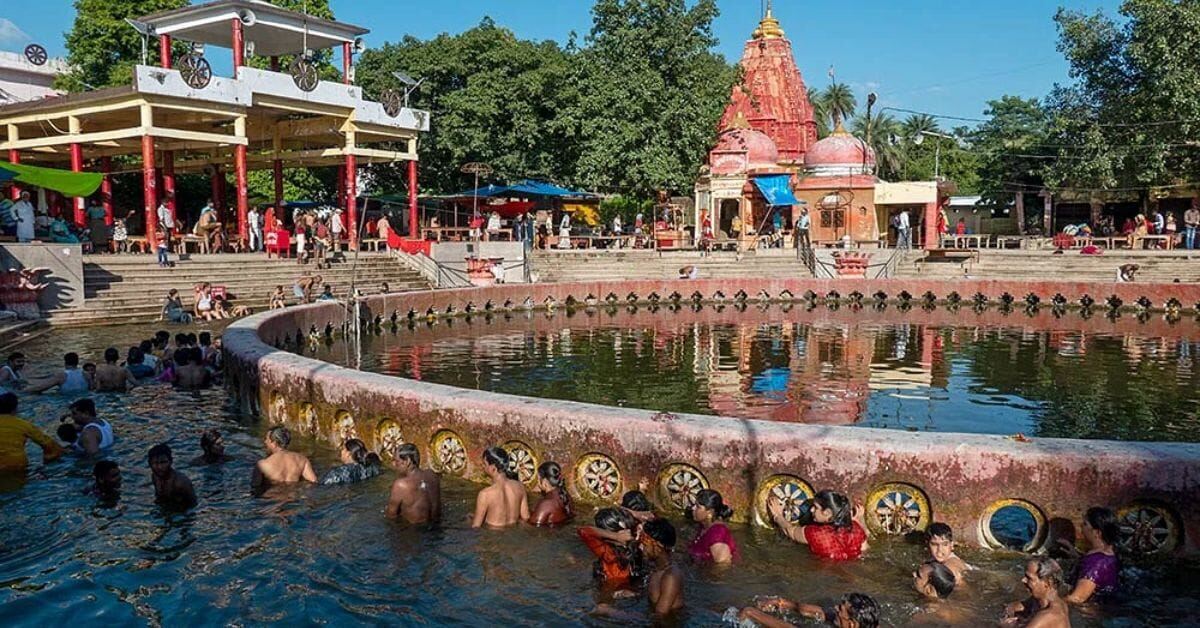
The heart of Naimisaranya is Chakra Tirtha, a circular pond that marks the exact spot where Brahma’s chakra is believed to have fallen. The pond’s circular shape is said to be the impression left by the divine wheel—a permanent reminder of that sacred moment when heaven touched earth.
Pilgrims come from across India to take a holy dip in these waters, believing it cleanses them of karmic debts accumulated over lifetimes. But you don’t have to be deeply religious to appreciate the atmosphere here. There’s something profoundly peaceful about sitting on the ghats, watching the ripples on the water’s surface, listening to the chanting of mantras, and feeling disconnected from the chaos of modern life.
The architecture around Chakra Tirtha is simple compared to Lucknow’s grandeur, but that’s precisely the point. Here, spirituality doesn’t need ornate decorations or towering structures. The divinity lies in the simplicity, in the ancient trees that surround the pond, in the faces of devotees lost in prayer, and in the timeless rituals that continue unchanged.
Temples and Ashrams of Naimisaranya
Beyond Chakra Tirtha, Naimisaranya houses several temples and ashrams, each with its own significance. The Lalita Devi Temple, dedicated to Goddess Shakti, attracts devotees seeking blessings for prosperity and well-being. The temple’s atmosphere during aarti (worship ceremony) is electric with devotion, with the collective energy of worshippers creating an almost tangible spiritual presence.
Hanuman Gadhi, perched on a small hill, offers both spiritual solace and panoramic views of the surrounding countryside. The climb to the temple is considered an act of devotion, and many pilgrims do it while chanting Hanuman’s name. Inside, the powerful presence of the deity is said to grant strength and courage to devotees facing life’s challenges.
Various ashrams dot the landscape, offering accommodation and spiritual guidance to seekers. These aren’t commercial establishments but genuine spaces for spiritual practice, where you can participate in meditation sessions, listen to discourses on ancient texts, or simply sit in silence absorbing the peaceful vibrations.
The Spiritual Atmosphere of Naimisaranya
What truly sets Naimisaranya apart isn’t its monuments or even its mythology—it’s the atmosphere. There’s a palpable stillness here that’s hard to describe but impossible to ignore. It’s as if the thousands of years of spiritual practice have saturated the very air with peace and serenity.
Unlike touristy pilgrimage sites, Naimisaranya remains relatively unspoiled by commercialization. You won’t find aggressive vendors or flashy attractions. What you will find are genuine spiritual seekers, simple priests performing age-old rituals with sincere devotion, and an environment conducive to introspection and meditation.
Many visitors report experiencing a sense of timelessness here—as if the busy modern world with all its anxieties and ambitions doesn’t exist. Whether you’re religiously inclined or not, spending time in Naimisaranya offers something increasingly rare in our fast-paced world: space for quiet reflection and spiritual renewal.
Why This Tour Package is Perfect for Every Traveler
For History Buffs
If you’re someone who gets excited by historical narratives and architectural achievements, Lucknow alone is worth the trip. Every monument here tells multiple stories—of the rulers who built them, the artisans who crafted them, the events they witnessed, and the people they served. The city offers a masterclass in Indo-Islamic architecture, urban planning, and the cultural synthesis that defined medieval India.
Naimisaranya adds a deeper historical dimension—not just documented history but legendary history that predates written records. Walking through this ancient pilgrimage site connects you to traditions that have survived for millennia, offering perspectives on how spirituality shaped Indian civilization.
For Spiritual Seekers
For those on a spiritual quest, this tour package offers unparalleled opportunities. While Lucknow provides exposure to the beautiful amalgamation of cultures and the refined expression of devotion through art and architecture, Naimisaranya offers direct spiritual experiences.
Participating in rituals at Chakra Tirtha, meditating in ancient groves where sages once sat, listening to spiritual discourses, and simply absorbing the peaceful vibrations—these experiences can be transformative for sincere seekers. The journey itself becomes a moving meditation, with each destination offering different facets of spiritual exploration.
For Food Enthusiasts
Calling all foodies! The Lucknow portion of this tour is essentially a culinary pilgrimage. Awadhi cuisine is not just about eating; it’s about understanding how food can be elevated to an art form. From the intricately spiced kebabs to the subtly flavored biryanis, from the delicate sweets to the refreshing beverages—every meal in Lucknow is an event.
Even the simple vegetarian fare available in Naimisaranya offers its own revelations. The sattvic food served here—cooked without onions and garlic, emphasizing purity over complexity—teaches you that nourishment isn’t always about elaborate preparations but sometimes about simplicity and intention.
For Families and Solo Travelers
This tour package works beautifully for different types of travelers. Families will appreciate the educational aspects for children, the variety that keeps everyone engaged, and the safe, well-trodden tourist routes. The contrast between the two destinations ensures that family members with different interests—some preferring culture and history, others seeking spiritual experiences—all find something fulfilling.
Solo travelers will find this journey equally rewarding. Lucknow’s friendly atmosphere and well-developed tourism infrastructure make it easy to navigate alone, while Naimisaranya’s ashrams and spiritual environment provide natural opportunities for introspection and meeting like-minded fellow travelers. The combination of urban exploration and spiritual retreat creates a balanced solo travel experience.
Crafting the Perfect Itinerary
Day-by-Day Breakdown
Day 1: Welcome to Lucknow Your adventure begins as you arrive in the City of Nawabs. After checking into your hotel, start with a visit to Bara Imambara. Spend adequate time exploring the Bhul Bhulaiya—getting pleasantly lost is part of the fun! In the afternoon, visit the adjacent Rumi Darwaza for photographs and historical context. As evening falls, head to Hazratganj for shopping and to experience the city’s vibrant street life. End the day with dinner at a traditional Awadhi restaurant—perhaps Tunday Kababi for your first taste of legendary kebabs.
Day 2: Deep Dive into Lucknow’s Heritage Begin with a heritage walk through old Lucknow, exploring the narrow lanes of Chowk where Chikankari artisans still work their magic. Visit the Residency, a poignant reminder of 1857’s struggles. In the afternoon, experience Chota Imambara’s glittering beauty. Enjoy a full-fledged dastarkhwan lunch experience where multiple courses are served in traditional Awadhi style. Evening could include a visit to the riverfront or attending a cultural performance if available. This day immerses you completely in Lucknow’s cultural richness.
Day 3: Journey to the Sacred After breakfast, begin your journey to Naimisaranya. The 90-kilometer drive offers glimpses of rural Uttar Pradesh—a complete contrast to urban Lucknow. Upon arrival, check into your accommodation (likely a dharamshala or simple hotel). After freshening up, proceed to Chakra Tirtha. Take a holy dip if you wish, or simply sit on the ghats absorbing the spiritual atmosphere. Visit nearby temples and interact with local priests to understand the site’s significance. The slower pace here helps you decompress from city energy.
Day 4: Spiritual Sojourn Rise early for morning prayers at Hanuman Gadhi. Sunrise at pilgrimage sites has a special quality—the fresh air, thin crowds, and heightened spiritual atmosphere create perfect conditions for meditation and reflection. Visit Lalita Devi Temple and participate in the morning aarti. Spend time at any ashrams you’re interested in, perhaps attending a discourse or meditation session. After lunch, begin your journey back to Lucknow, carrying memories and spiritual insights that will stay with you long after the journey ends.
Must-See Attractions in Both Cities
In Lucknow, don’t miss: Bara Imambara with Bhul Bhulaiya, Rumi Darwaza, Chota Imambara, the Residency, Hazratganj Market, and at least three meals at iconic eateries—Tunday Kababi, Rahim’s Kulcha Nihari, and any shop serving authentic Lucknowi biryani.
In Naimisaranya, prioritize: Chakra Tirtha (multiple visits at different times of day offer different perspectives), Lalita Devi Temple, Hanuman Gadhi, and Vyas Gaddi (the seat where Vyasa is believed to have narrated the Puranas). Also spend time at ashrams for spiritual discourses or meditation sessions.
Hidden Gems You Shouldn’t Miss
In Lucknow:
- The British Residency’s ruins at sunset—hauntingly beautiful
- Aminabad Market for local shopping away from tourist crowds
- Gomti Riverfront for peaceful evening walks
- Dilkusha Kothi ruins for photography enthusiasts
- Local Kathak dance schools where you might catch practice sessions
In Naimisaranya:
- Early morning walks around Chakra Tirtha when mist rises from the water
- Small temples in surrounding villages, each with unique stories
- Conversations with resident sadhus who share wisdom generously
- The ancient banyan trees believed to be thousands of years old
- Simple meals at ashram bhandaris (dining halls) that connect you to pilgrim traditions
Practical Travel Information
Getting There and Around
Lucknow is exceptionally well-connected. Chaudhary Charan Singh International Airport receives flights from major Indian cities and select international destinations. From the airport, pre-paid taxis, app-based cabs, and airport shuttle services make reaching the city center convenient.
If you prefer rail travel, Lucknow Junction and Charbagh Railway Stations are major junctions with excellent connectivity. The city’s metro system, though limited, covers important areas and complements traditional auto-rickshaws and taxis for local transportation.
For the journey to Naimisaranya, hiring a private car through your tour package is recommended. The 90-kilometer journey takes 2-3 hours depending on traffic and road conditions. While public buses are available from Alambagh or Charbagh bus stations to Sitapur (nearest town), they require additional local transport to reach Naimisaranya, making private transportation more convenient.
Where to Stay
Lucknow offers accommodation across all price ranges. Luxury seekers can choose from heritage hotels converted from old havelis, offering authentic Nawabi hospitality with modern amenities. Properties like the Lebua Lucknow and Hotel Clarks Avadh provide five-star comfort, while mid-range options like Hotel Lineage and Hotel Gomti offer excellent value.
Budget travelers will find numerous guesthouses and budget hotels near major attractions. For unique experiences, consider heritage homestays where local families welcome guests, providing insights into contemporary Lucknowi culture.
In Naimisaranya, accommodations are simpler. Dharamshalas (pilgrim rest houses) offer basic but clean rooms at minimal costs, often on a donation basis. A few modest hotels provide slightly more comfort but still maintain the area’s simple, spiritual character. Don’t expect luxury; instead, embrace the simplicity as part of your spiritual journey.
Budgeting for Your Trip
Budget considerations depend on your travel style:
Budget Travel: ₹2,000-3,000 per day per person (accommodation in budget hotels/dharamshalas, public transport, simple meals, limited shopping)
Mid-Range Travel: ₹4,000-6,000 per day per person (comfortable hotels, private car for Naimisaranya trip, restaurant dining, moderate shopping)
Luxury Travel: ₹8,000+ per day per person (heritage hotels, guided tours, fine dining, extensive shopping)
Entry fees to monuments are minimal (usually ₹50-200 for Indians, slightly higher for foreign nationals). The major expense is accommodation and private transportation. Food in Lucknow can range from ₹100 for street food to ₹1,500+ for fine dining. In Naimisaranya, meals are inexpensive, often available at ashram bhandaris for ₹50-100.
Best Season to Experience Both Destinations
Timing your visit can significantly enhance your experience. The ideal period is October through March when North Indian weather is most pleasant. Let’s break this down by season:
Winter (November-February): Peak season with temperatures between 10-25°C. Perfect for sightseering, though mornings and evenings can be chilly. December and January might require light woolens. This is festival season too, potentially offering chances to witness local celebrations.
Early Spring (March): Still comfortable with temperatures rising gradually. Excellent for outdoor exploration before summer heat sets in. Holi (if it falls in March) adds colorful cultural experiences.
Monsoon (July-September): Moderate rainfall transforms the landscape into lush greenery. While occasional showers might disrupt plans, the reduced tourist crowds and romantic ambiance appeal to some travelers. Naimisaranya particularly becomes beautiful with the surrounding countryside turning green.
Summer (April-June): Temperatures often exceed 40°C, making outdoor exploration uncomfortable. However, if you must travel during this period, plan monument visits for early morning or late evening. Indulge in Lucknow’s famous kulfi and cooling beverages!
Avoid: The peak summer months of May and June unless you’re comfortable with intense heat.
Travel Tips for a Memorable Experience
Respect Religious Sentiments: Both destinations have strong religious significance. Dress modestly, especially in Naimisaranya. Remove footwear before entering temples, and ask permission before photographing religious ceremonies or priests.
Stay Hydrated: Carry water bottles, especially during summer months. Lucknow’s cuisine is rich and might cause digestive adjustments for some; stay hydrated to help your system adapt.
Bargain Wisely: Haggling is expected in markets like Chowk and Hazratganj, but do it good-naturedly. In Naimisaranya, if making donations at temples or dharamshalas, give what feels appropriate—there’s no fixed amount.
Language: Hindi and Urdu are widely spoken. English works in tourist areas of Lucknow but less so in Naimisaranya. Learning basic Hindi phrases enhances interactions and shows cultural respect.
Safety: Both destinations are generally safe, but practice standard precautions. Keep valuables secure, be cautious in crowded areas, and use registered transportation.
Photography: Lucknow is extremely photogenic—capture away! However, always ask permission before photographing people, especially women. Some Naimisaranya temples prohibit photography inside sanctums; respect these rules.
Connectivity: Mobile networks and internet are excellent in Lucknow but can be patchy in Naimisaranya. Inform family about potential connectivity gaps during the spiritual portion of your journey.
Food Adventures: Be adventurous with Lucknow’s street food but choose busy, popular stalls where food turnover is high. If you have a sensitive stomach, stick to cooked items and avoid raw vegetables or unpeeled fruits from street vendors.
Conclusion: Bridging Two Worlds
The Lucknow and Naimisaranya tour package isn’t just a vacation—it’s a journey through contrasting dimensions of Indian culture. You begin in Lucknow, where every monument echoes with stories of grandeur, where every meal is a celebration, and where refinement is woven into the very fabric of daily life. The city teaches you about human creativity at its finest—how architecture can defy engineering logic, how cuisine can be elevated to poetry, and how hospitality can be perfected into an art form.
Then you transition to Naimisaranya, where simplicity replaces opulence, silence speaks louder than grand narratives, and the focus shifts from external splendor to internal exploration. Here, you learn about the spiritual foundations that have sustained Indian civilization through millennia—the quest for meaning beyond material existence, the value of contemplation, and the peace that comes from connecting with something larger than yourself.
These contrasting experiences don’t conflict; they complement and complete each other. Together, they offer a holistic understanding of Indian culture—its material achievements and spiritual depth, its capacity for grandeur and its appreciation for simplicity, its celebration of sensory experiences and its recognition of transcendent realities.
Whether you’re marveling at Bara Imambara’s engineering genius, savoring Tunday Kababi’s melt-in-mouth kebabs, taking a holy dip in Chakra Tirtha, or meditating in Naimisaranya’s ancient groves, each moment adds another layer to your understanding of India’s incredible diversity. This tale of two cities becomes your story—a personal narrative of discovery, taste, spirituality, and transformation that you’ll carry with you long after returning home.
FAQs
1. How different are Lucknow and Naimisaranya in terms of tourist experience?
Lucknow and Naimisaranya offer dramatically different experiences. Lucknow is an urban heritage destination with impressive monuments, bustling markets, and world-class cuisine—ideal for those who enjoy cultural tourism, architectural exploration, and culinary adventures. Naimisaranya is a rural pilgrimage site focused on spiritual experiences, simple living, and religious observances. The contrast is intentional and valuable, providing travelers with both cultural enrichment and spiritual renewal in one journey.
2. Is it necessary to be religious to enjoy Naimisaranya?
Not at all! While Naimisaranya holds deep religious significance and attracts devotees, the peaceful atmosphere, historical importance, and beautiful natural setting appeal to all travelers. Many visitors appreciate the site’s mythological connections, architectural simplicity, and serene environment regardless of their religious beliefs. Think of it as visiting a historically significant site that happens to have spiritual importance—you can appreciate it from multiple perspectives.
3. Can I customize the duration of stay in each city?
Absolutely! Most tour operators offer customizable packages. If you’re more interested in cultural and culinary experiences, you might allocate 3 days to Lucknow and 1 day to Naimisaranya. Conversely, spiritual seekers might prefer spending 2 days in Naimisaranya with extended time at ashrams. Discuss your preferences with tour operators to create an itinerary that matches your interests and available time.
4. What should I absolutely not miss in Lucknow?
Three non-negotiables: First, visit Bara Imambara and get lost in the Bhul Bhulaiya—it’s Lucknow’s most iconic experience. Second, eat at Tunday Kababi for the legendary galouti kebabs that define Awadhi cuisine. Third, experience the city’s refined culture through a heritage walk in old Lucknow, particularly the Chowk area where traditional crafts are still practiced. These three experiences capture Lucknow’s architectural genius, culinary excellence, and cultural heritage.
5. Are there any specific rituals or customs I should participate in at Naimisaranya?
While participation isn’t mandatory, taking a holy dip in Chakra Tirtha and attending the morning or evening aarti at major temples enriches your experience. If comfortable, you can also participate in simple puja rituals offered by temple priests (usually involving offering flowers and receiving prasad). Sitting in meditation near Chakra Tirtha, even briefly, helps you connect with the site’s spiritual essence. Remember, these are invitations to deeper experience, not obligations—participate to the extent you feel comfortable.



Comments are closed.